
Why “Good Flooring” in Kenya Is 50% Product — and 50% Installation
A modern laminate floor can look perfect on day one and still fail six months later if the subfloor, underlay, and expansion details aren’t done right. Here’s how we approach flooring as a system — not just planks in a box.
If you’re searching “laminate flooring Kenya”, you’ll see a lot of beautiful photos — but fewer explanations of what makes a floor stay quiet, flat, and stable through real day-to-day use. Below is a practical breakdown of the decisions that matter most.
1) Flooring is a system — product + prep + finishing
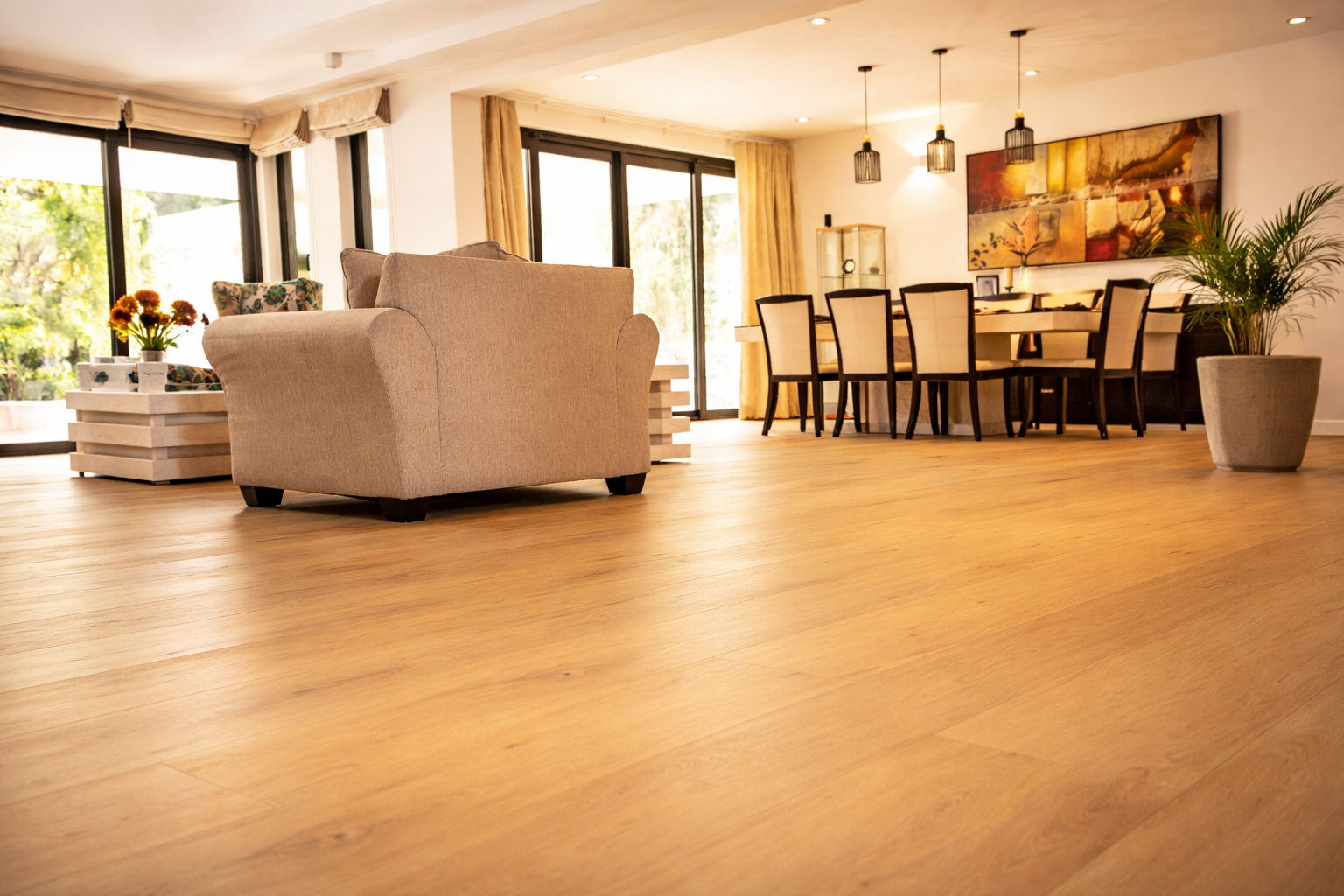
When a floor feels “premium”, it’s usually because multiple small details were handled correctly: the subfloor is flat, the underlay suits the room, the boards are acclimatized, the expansion gaps are respected, and finishing (skirtings, trims, transitions) is done cleanly.
- Subfloor flatness reduces bounce, squeaks, and long-term joint stress.
- Correct underlay controls sound, comfort, and moisture behavior.
- Expansion details prevent edge lift and “buckling” in hot/cool cycles.
- Finishing is what clients see every day — and what makes the job look “complete”.
2) Water resistance: what “waterproof” should mean in a Kenyan home

A “water-resistant” laminate isn’t magic — it’s an engineered set of protections that work best when the joints are tight, the edges are sealed where needed, and moisture isn’t trapped under the floor.
If you’re unsure which rooms should use laminate vs SPC vs other options, we can guide you based on traffic, cleaning habits, and room function.
3) Subfloor prep: the invisible difference (and why it matters)
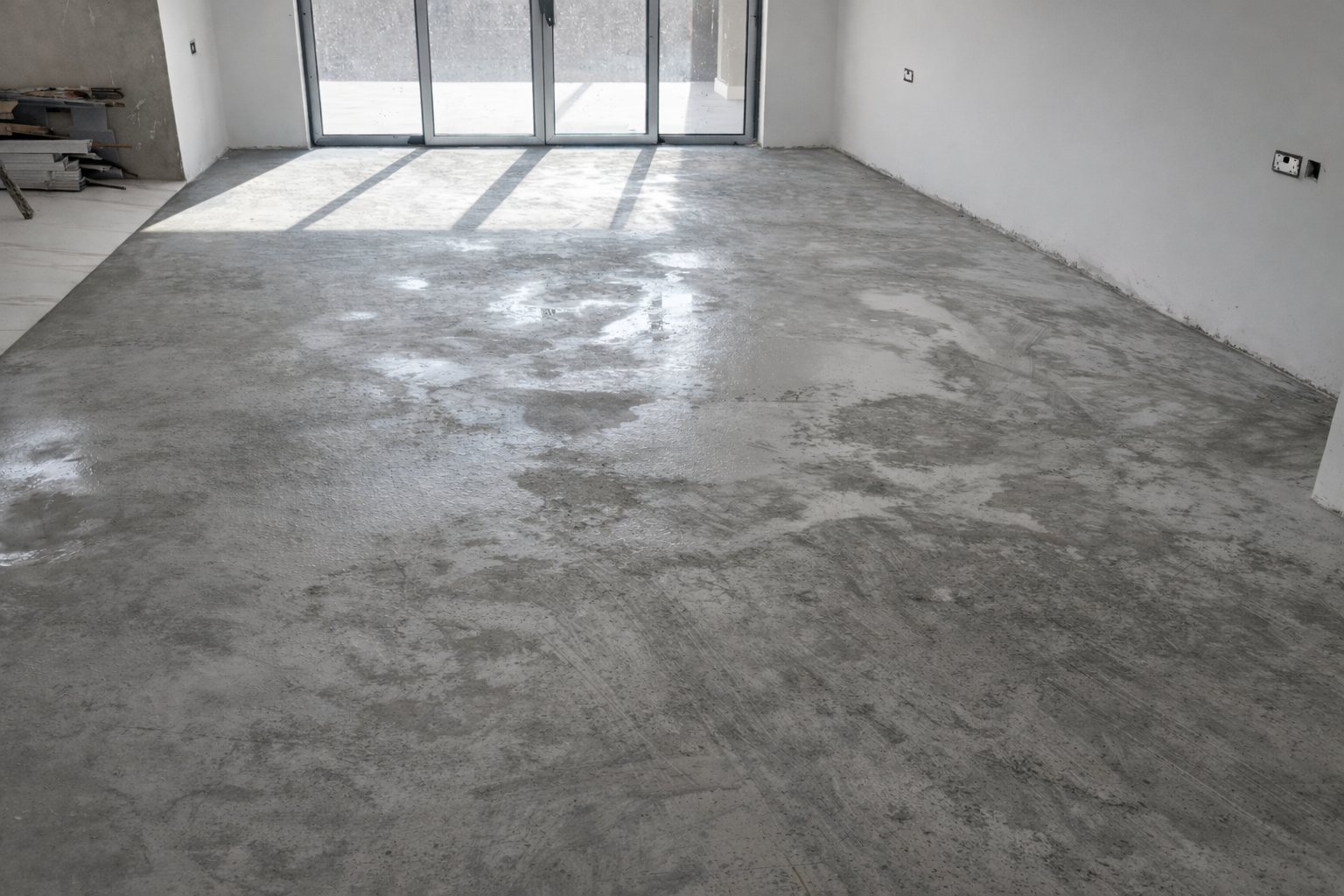
What we look for on site:
- Flatness checks (especially at joints and doorways)
- Moisture risk and room usage
- Transitions and thresholds (where floors meet)
- Staircase / landing detailing
4) Choosing the right material: laminate vs SPC vs engineered wood
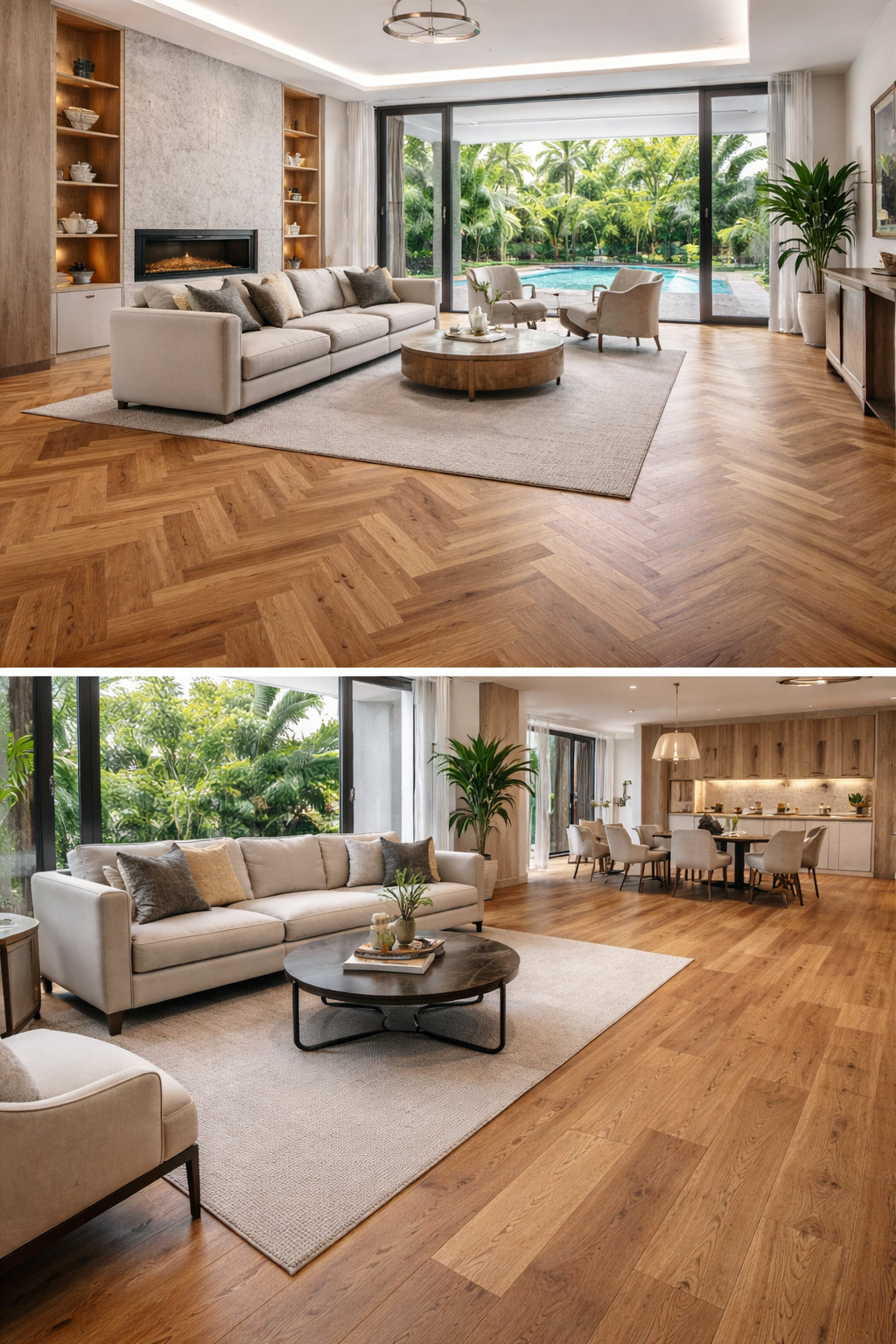
Laminate (wood-look, balanced value)
Great for living rooms, bedrooms, corridors, home offices and many commercial interiors when installed properly.

SPC / Rigid Core (moisture-resilient)
A strong option for higher moisture risk areas and busy spaces — with the right underlay and subfloor conditions.
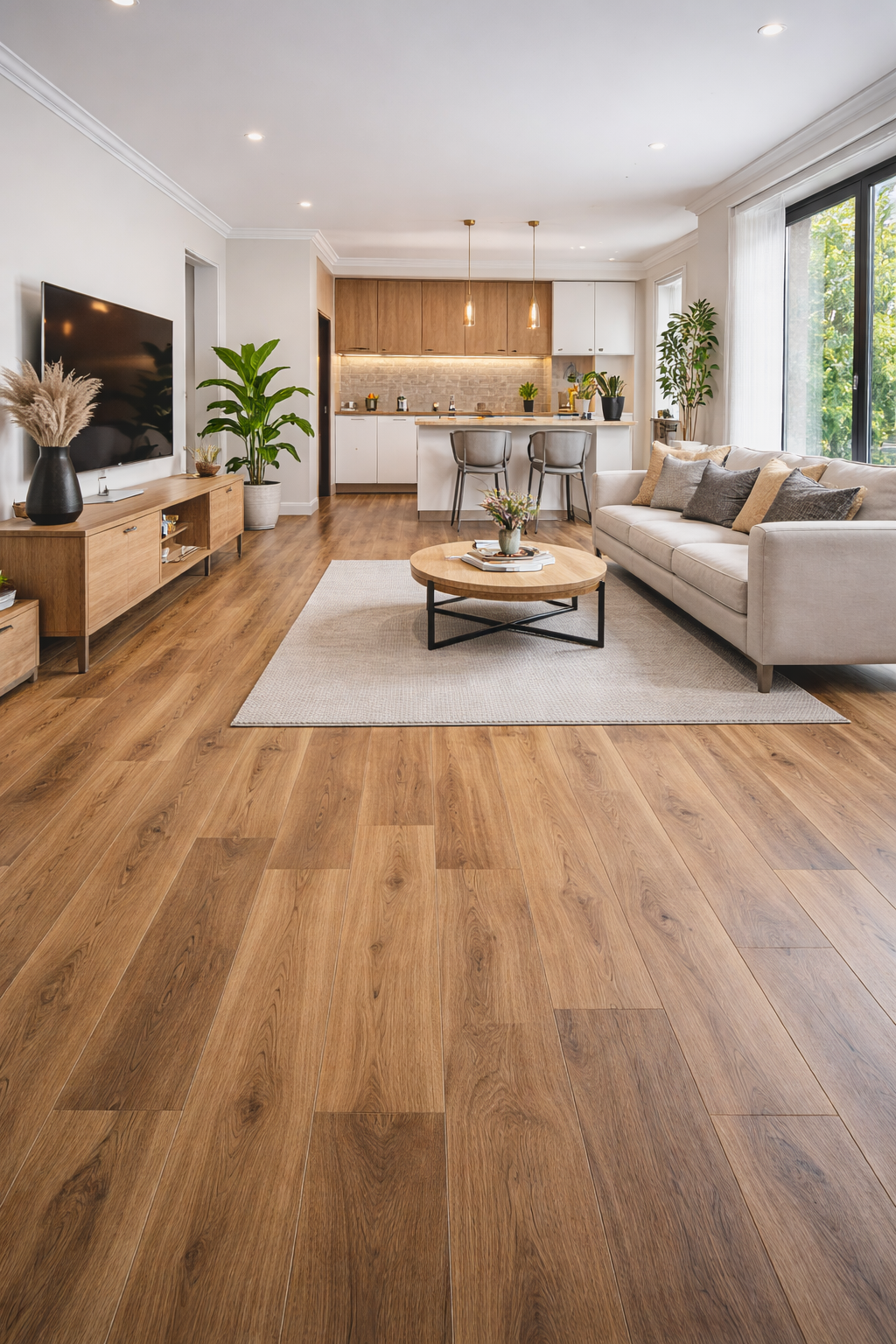
Engineered Wood (real timber surface)
For clients who want genuine hardwood character — best when planned with room usage, maintenance, and budget in mind.
Quick thought on “core strength”
Laminate quality is often felt in stability and long-term joint performance. A well-built core and good installation reduce movement and help the floor stay tight and clean-looking over time.
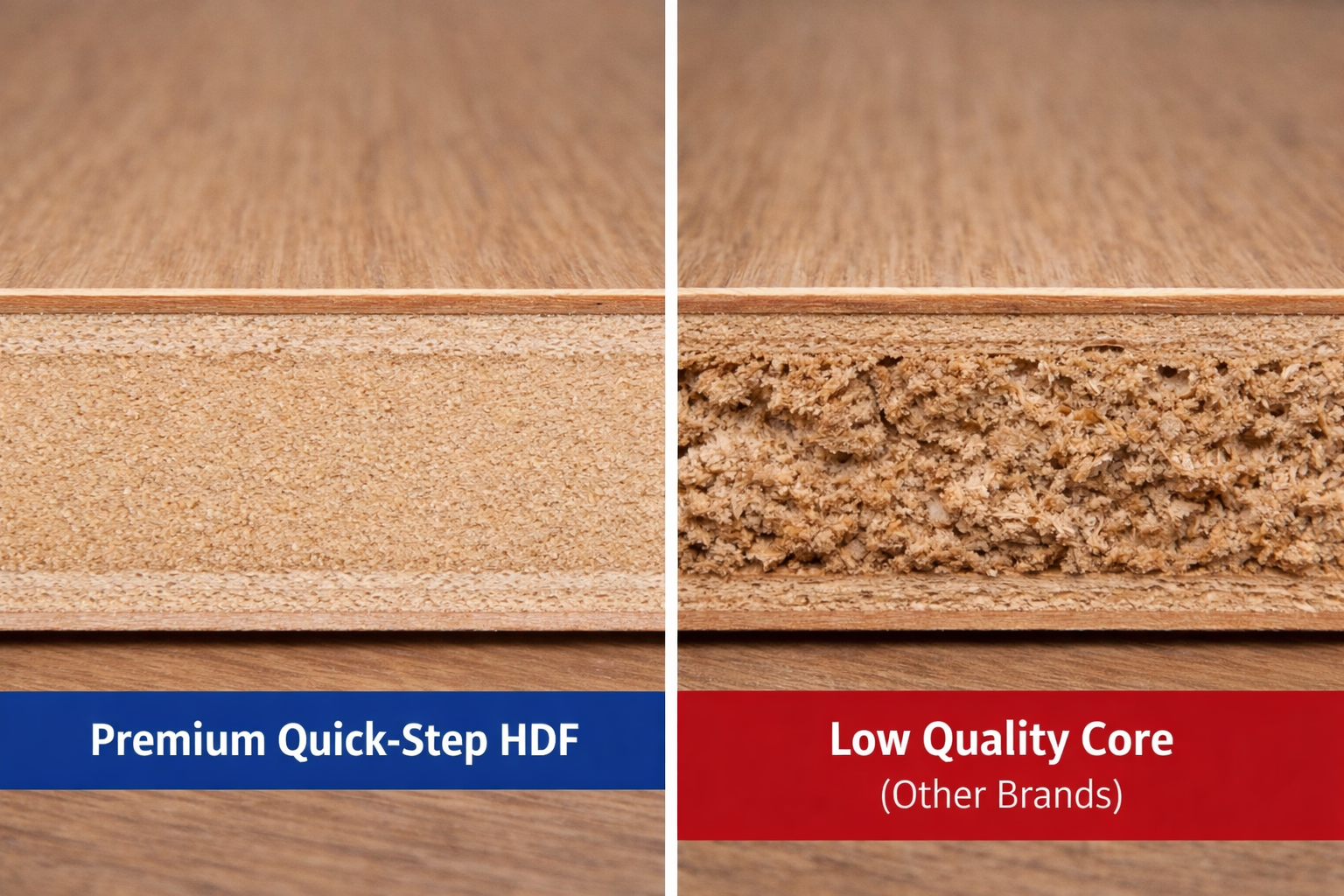
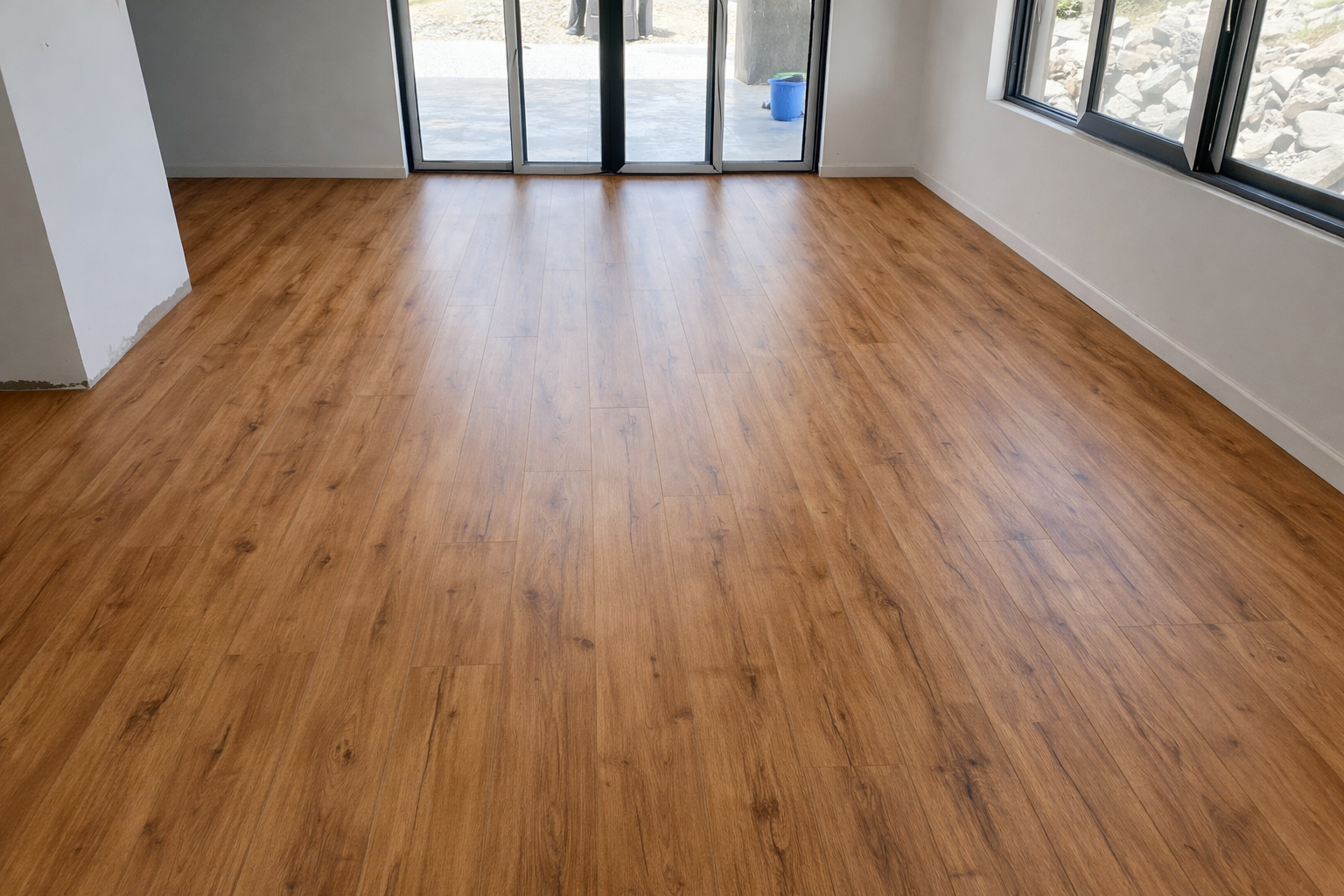
5) Before / after: what changes when flooring is installed properly
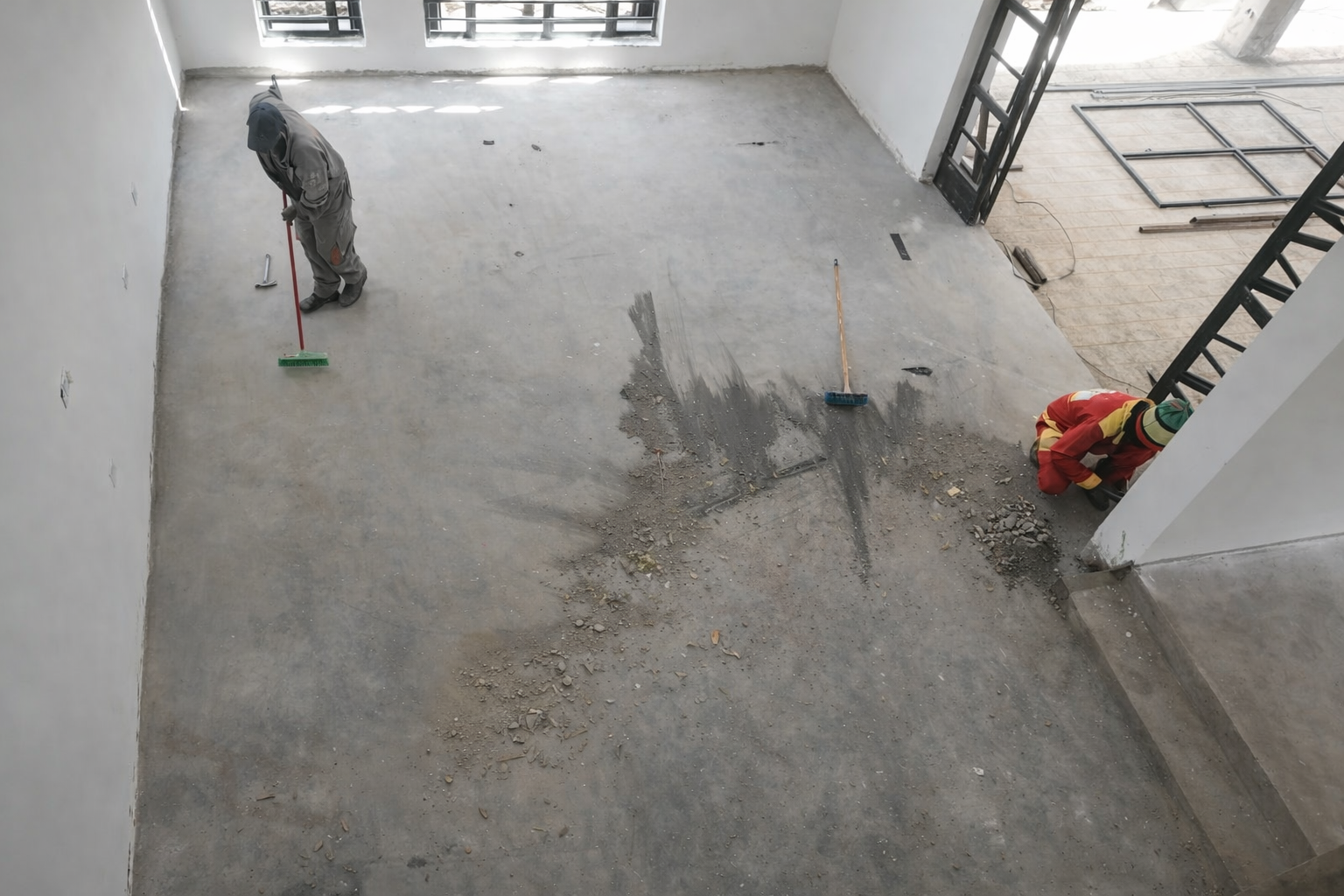
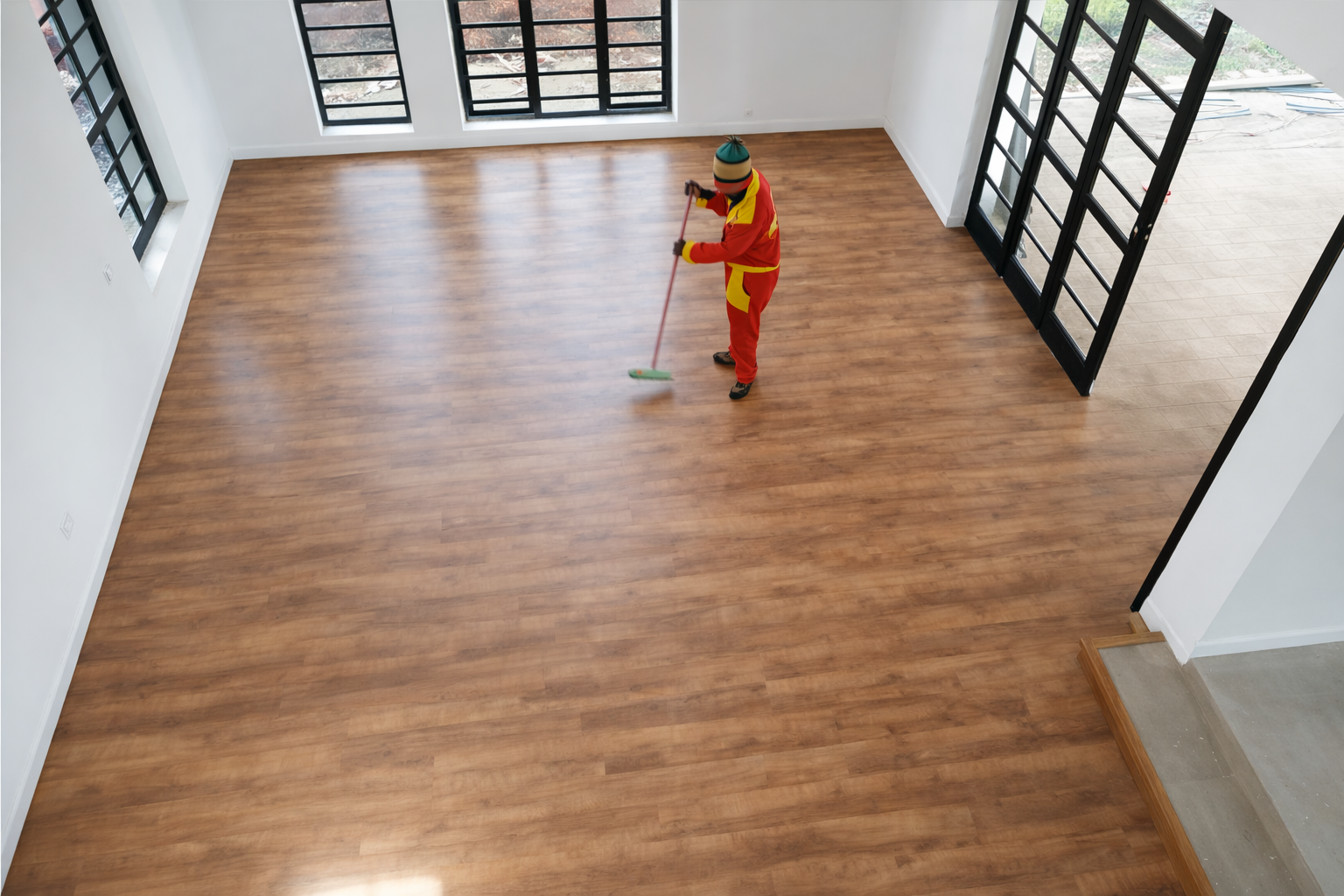
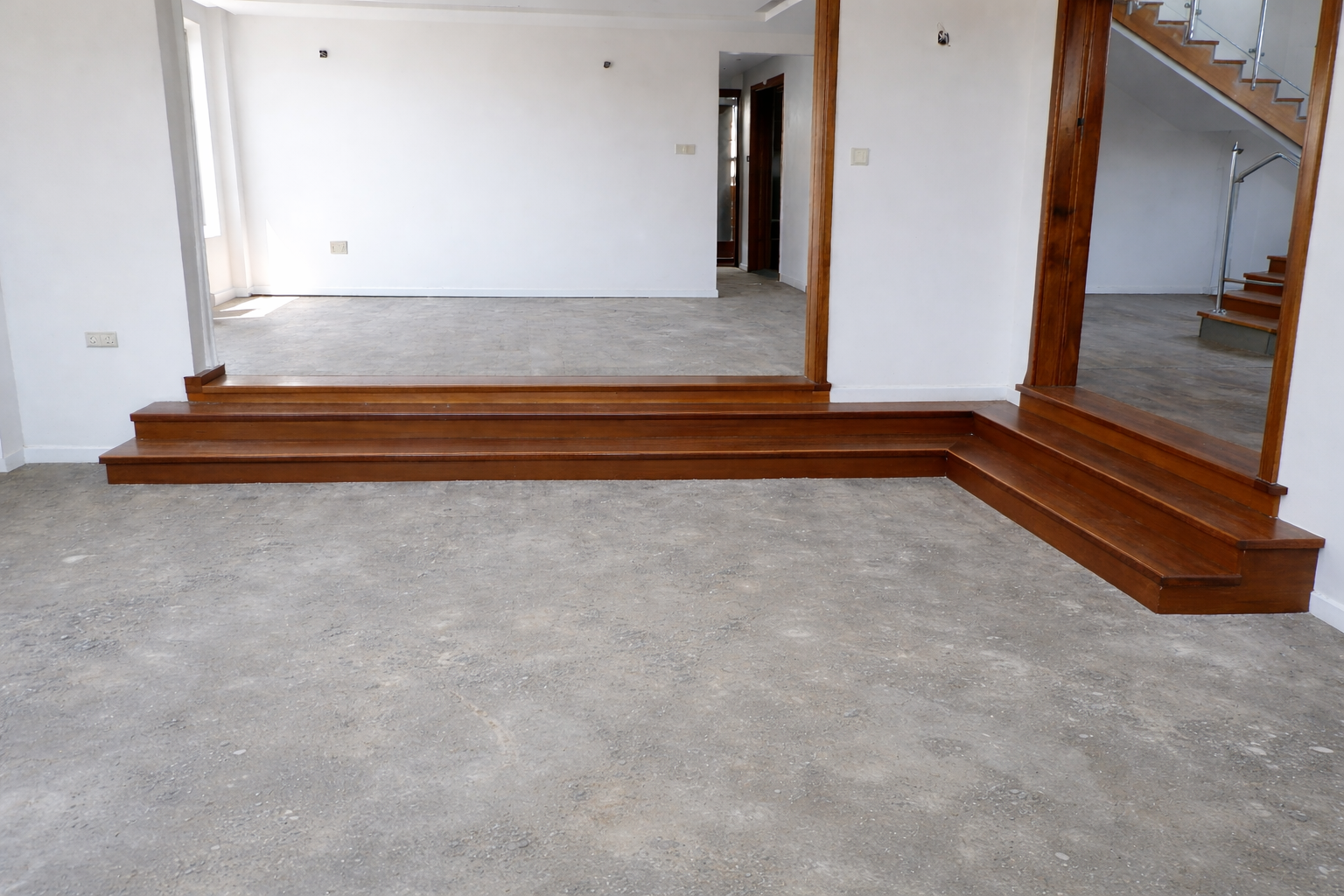
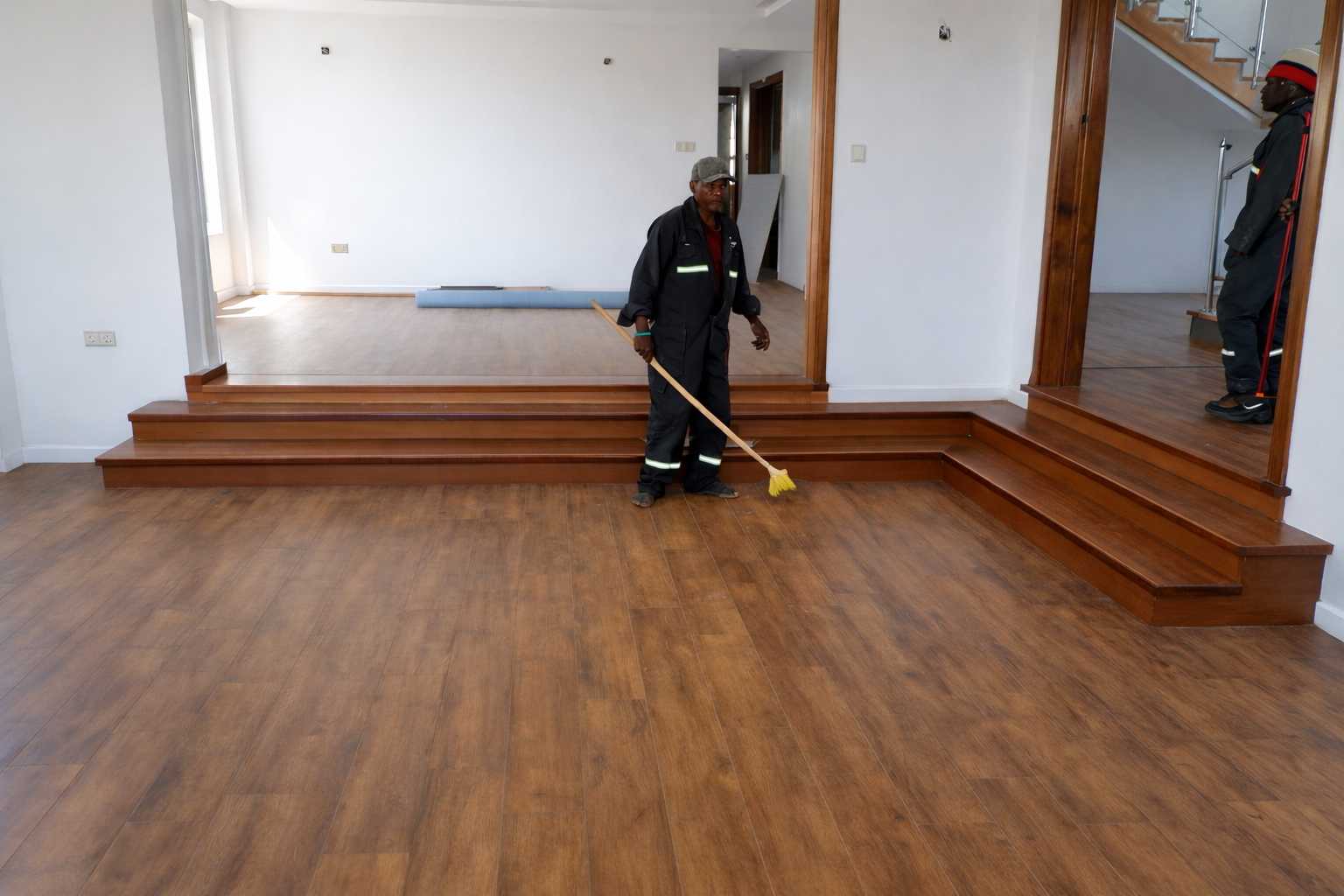
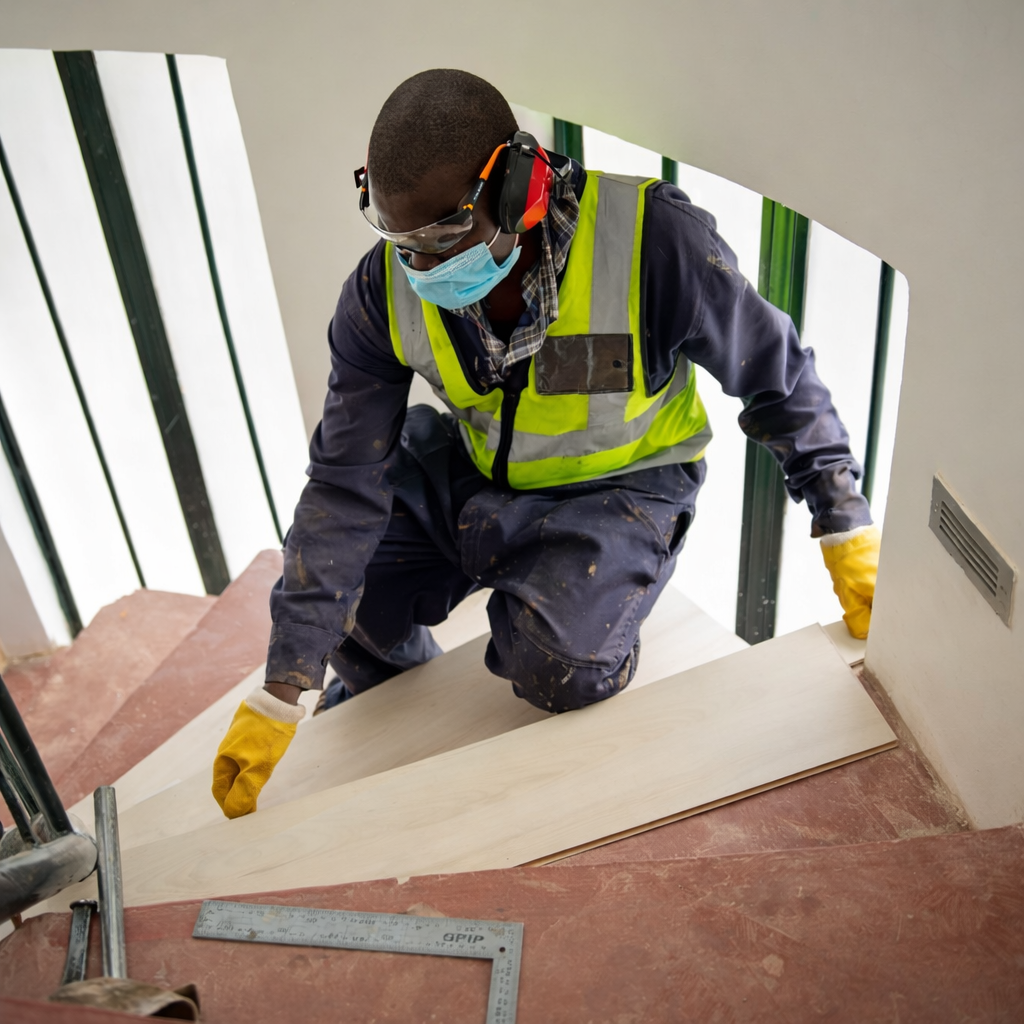
The quick “quality checklist” we use
- Subfloor flatness + moisture risk assessment
- Right underlay for acoustics + comfort
- Expansion gaps respected at edges/frames
- Transitions planned (not improvised)
- Clean trims + finishing (skirting/thresholds)
Bonus: what “better materials” often look like

Beyond the look, clients often care about long-term performance and a professional finish. The best outcomes usually come from combining a proven flooring range with correct site prep and disciplined installation.
Want the right flooring choice (and a clean installation plan)?
Share your location (Nairobi / Kiambu / etc.) and approximate area in m². We’ll advise on the best material option, underlay approach, trims, lead time and installation requirements.