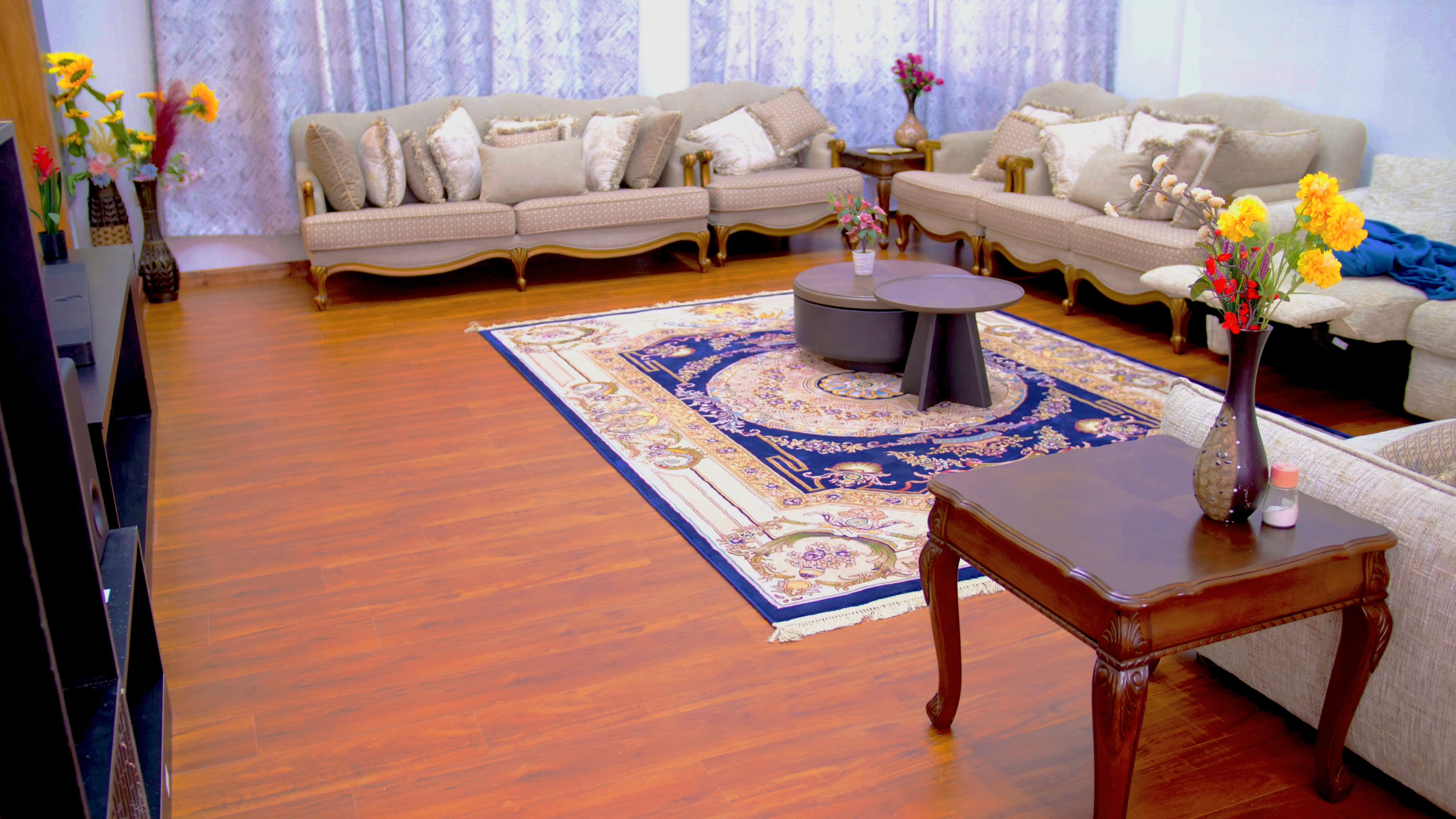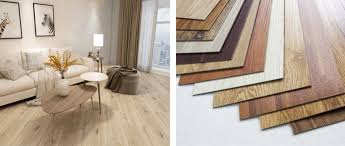
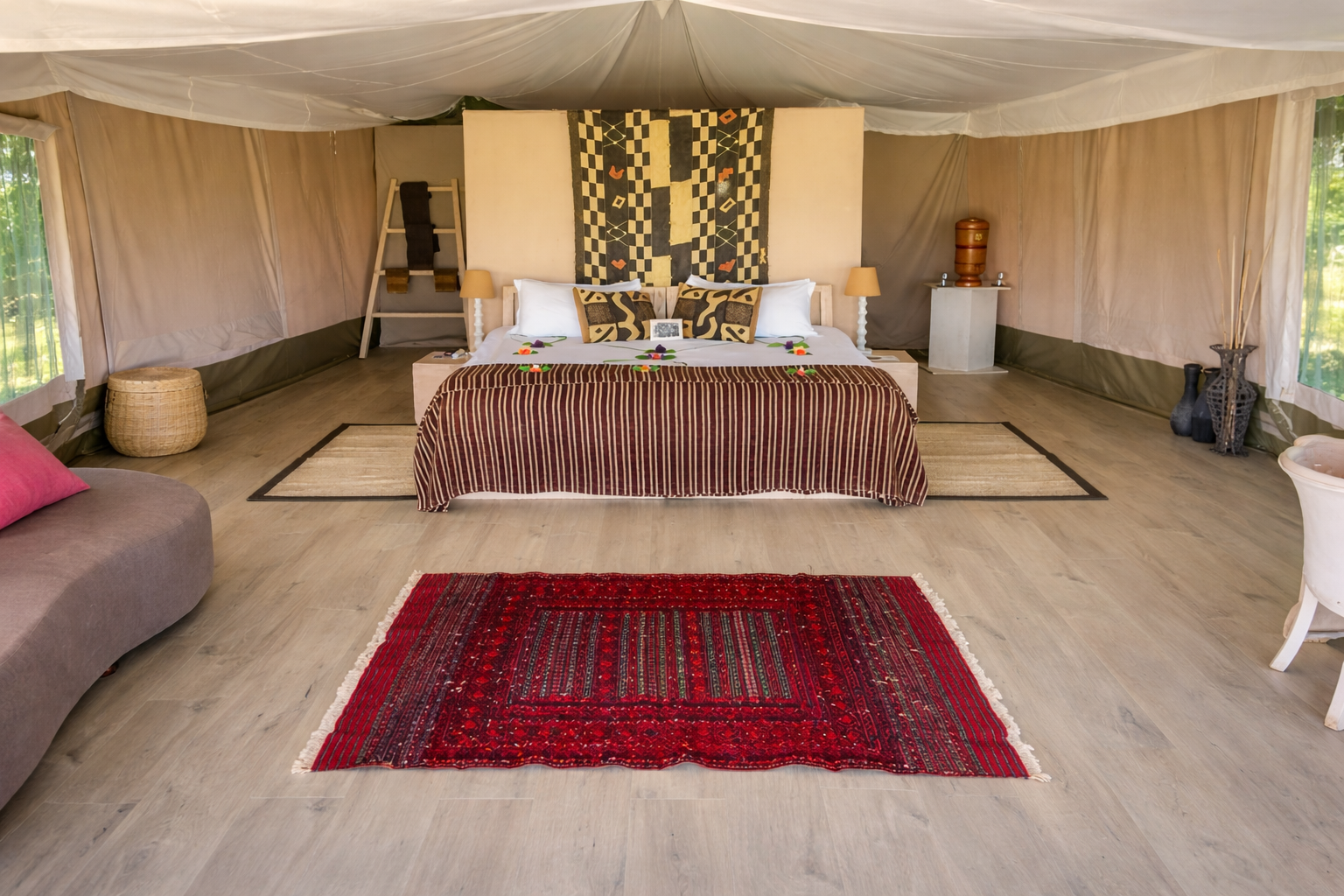
How Flooring Colour Affects Your Space in Kenya (Light, Dark & Pastels)
Flooring colour is one of the fastest ways to change how a room feels — bigger or smaller, brighter or heavier, calmer or more dramatic. This guide is written for real Kenyan homes and apartments, and applies to tiles, laminate, engineered wood, SPC/LVT, polished concrete and more.
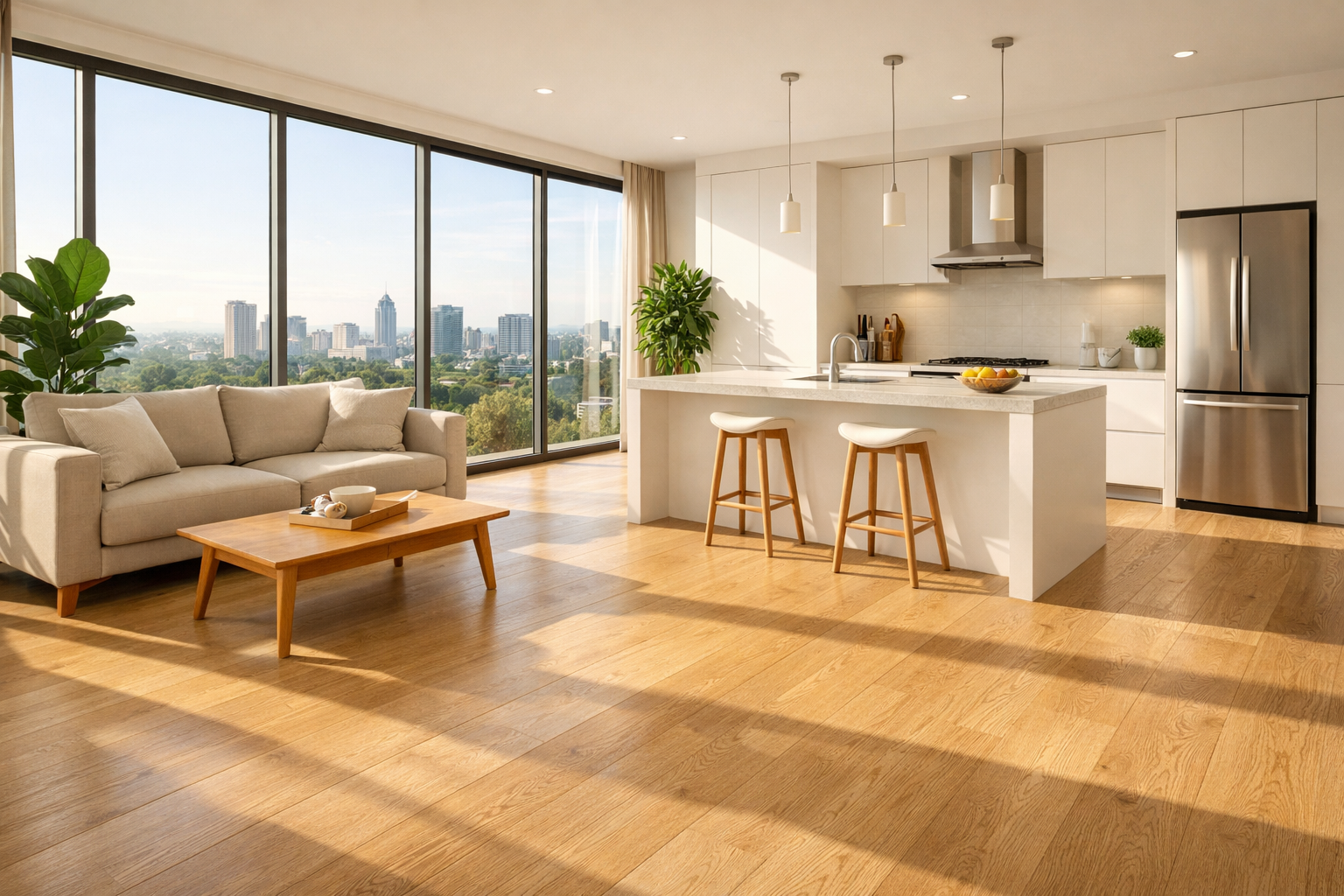
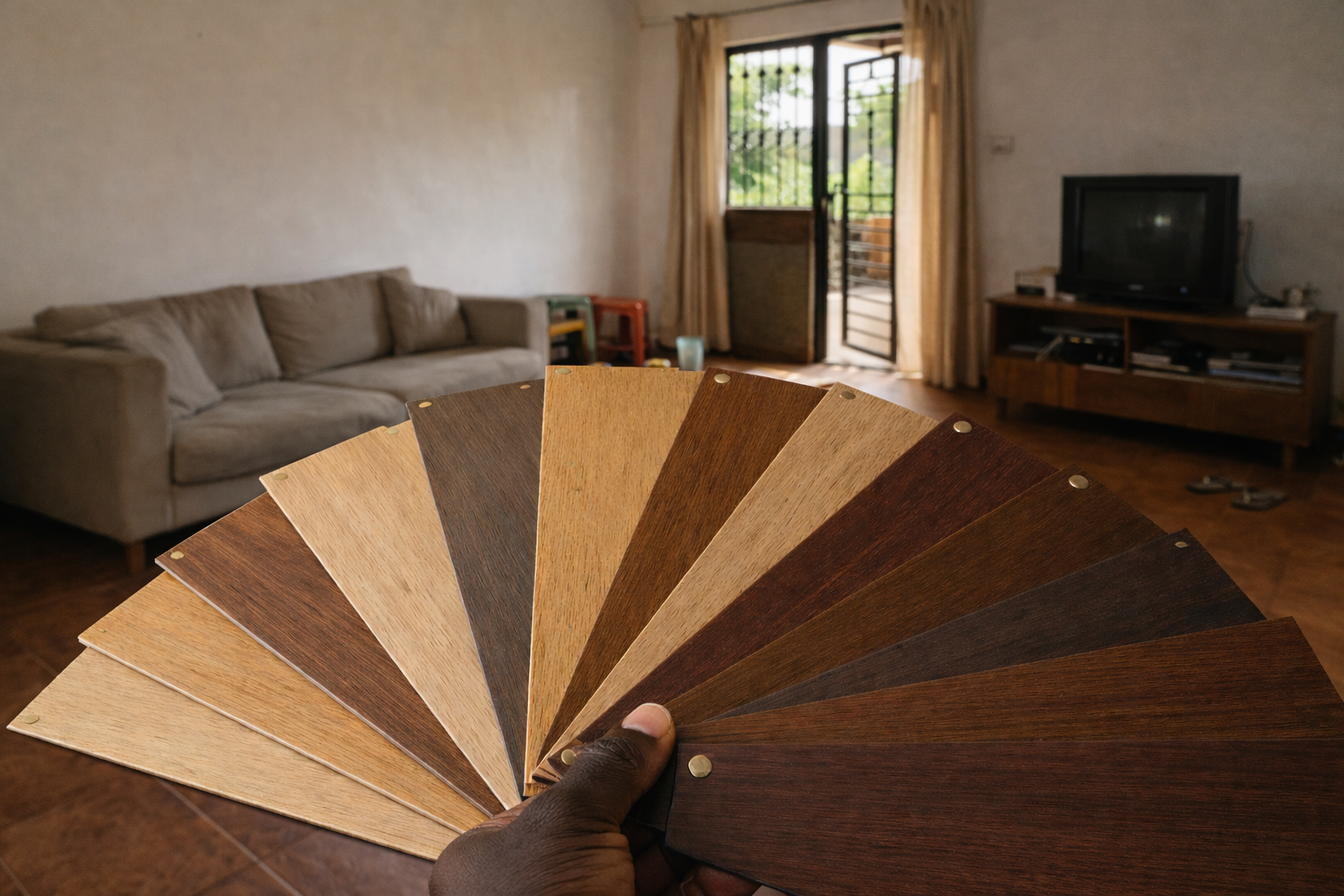
1) Light flooring makes rooms feel bigger (perfect for many Nairobi apartments)
If your space is compact, has limited windows, or you want a calmer “open” feeling, lighter floors usually win. They reflect daylight, reduce harsh shadows, and make walls feel further away.
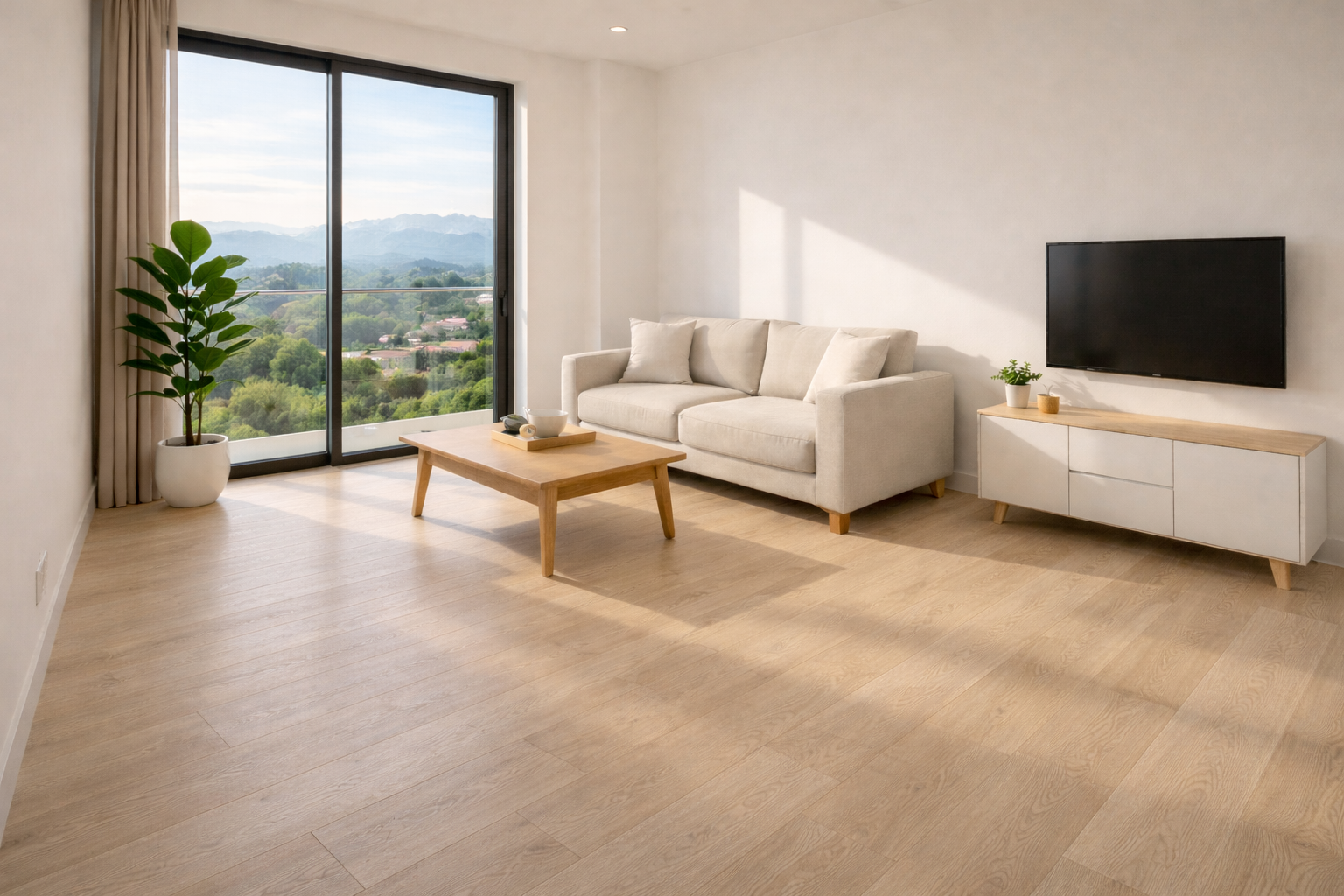
Where light floors work best in Kenya
- Small apartments (Kilimani, Kileleshwa, Westlands style layouts)
- Open-plan living where you want flow between kitchen and lounge
- Busy homes where you want a forgiving look day-to-day
- Neutral design that won’t fight your furniture choices
2) Dark flooring can look premium — but it needs contrast
Dark floors can feel luxurious and intentional, especially in larger rooms with good daylight. The key is not to “stack darkness on darkness”. Let the floor be bold, while walls and ceilings stay lighter.
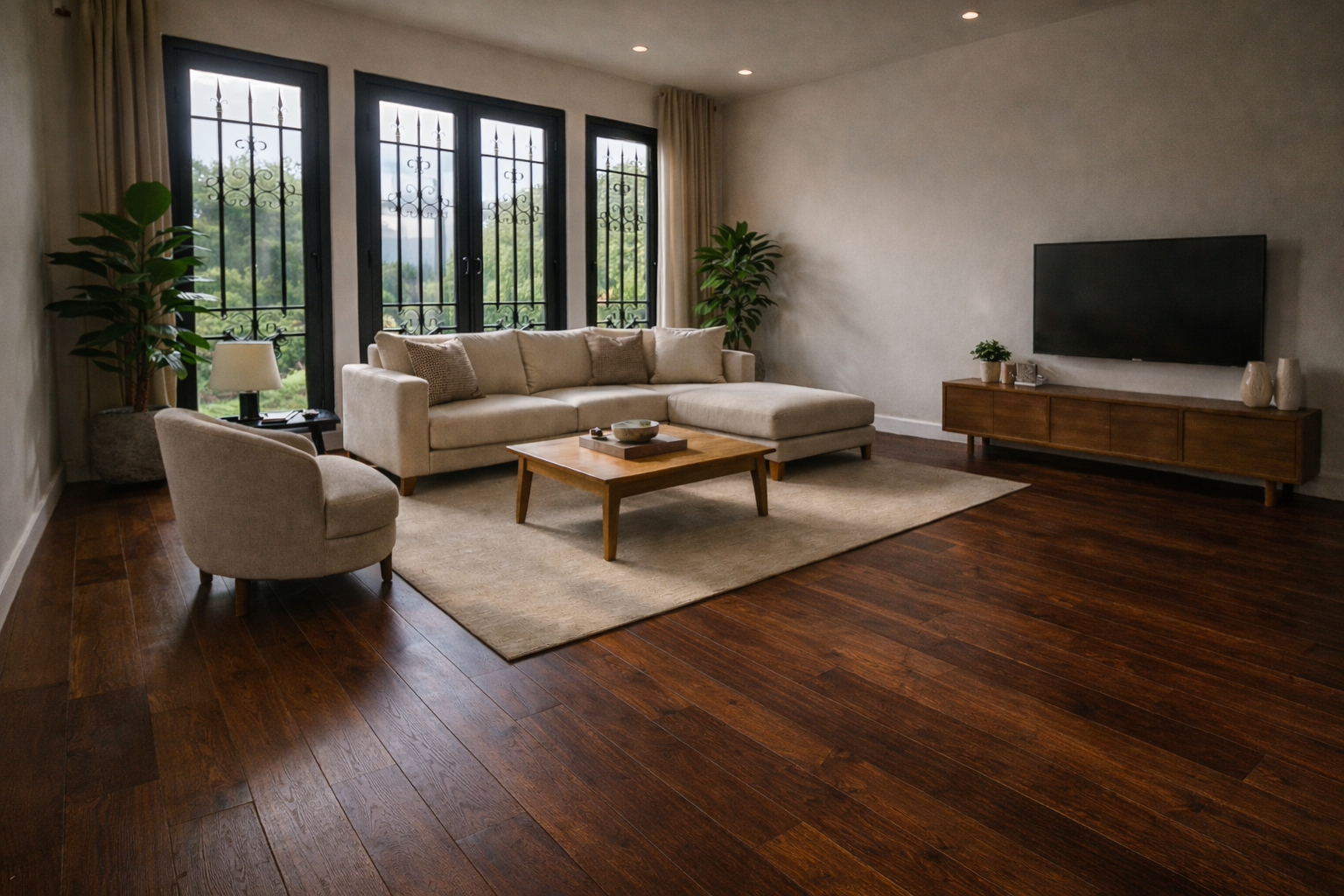
Dark floors are great when…
- You have big windows or strong natural light
- The room is spacious (high ceilings help)
- You want a bold modern look with crisp contrast
Be careful when…
- The room is small and you also want dark walls
- Daylight is limited (heavy mood, feels smaller)
- You don’t want to see dust/footprints as often
3) The #1 rule: contrast (good vs poor)
If you only remember one design principle from this article, make it this: contrast keeps a space feeling open. When floors and walls are too close in darkness (or too busy in pattern), the room can feel smaller and heavier.
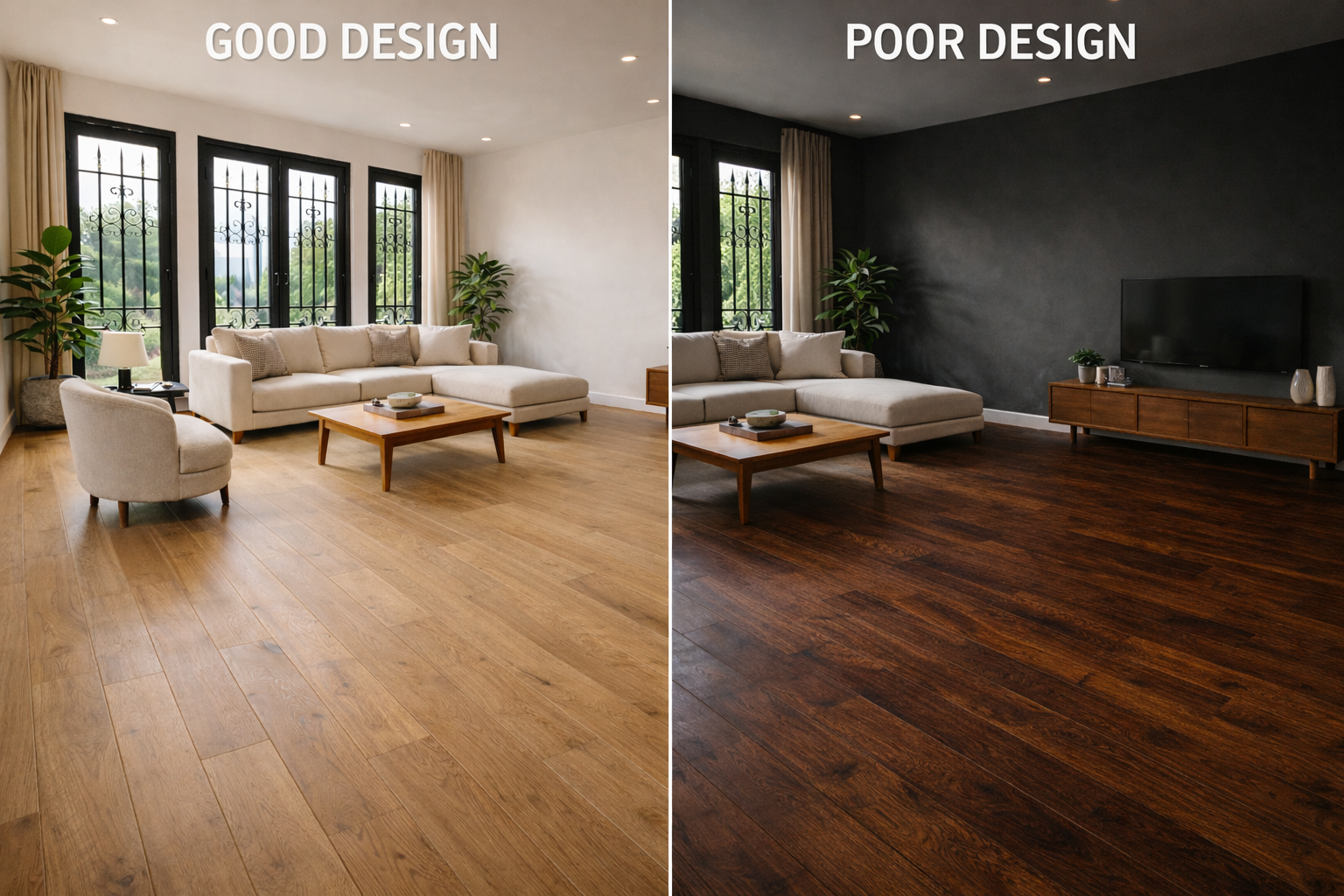
Fast rule of thumb
If your room is small or has limited daylight, choose a lighter floor or keep walls light. If your room is large and bright, you have more freedom to go dark.
4) Natural mid-tones: the safest “Kenya-proof” choice
In many Kenyan homes, a natural mid-tone works across styles — modern, classic, safari, coastal, even industrial. It also pairs well with popular local materials like stone, earthy paint colours, and warm lighting.
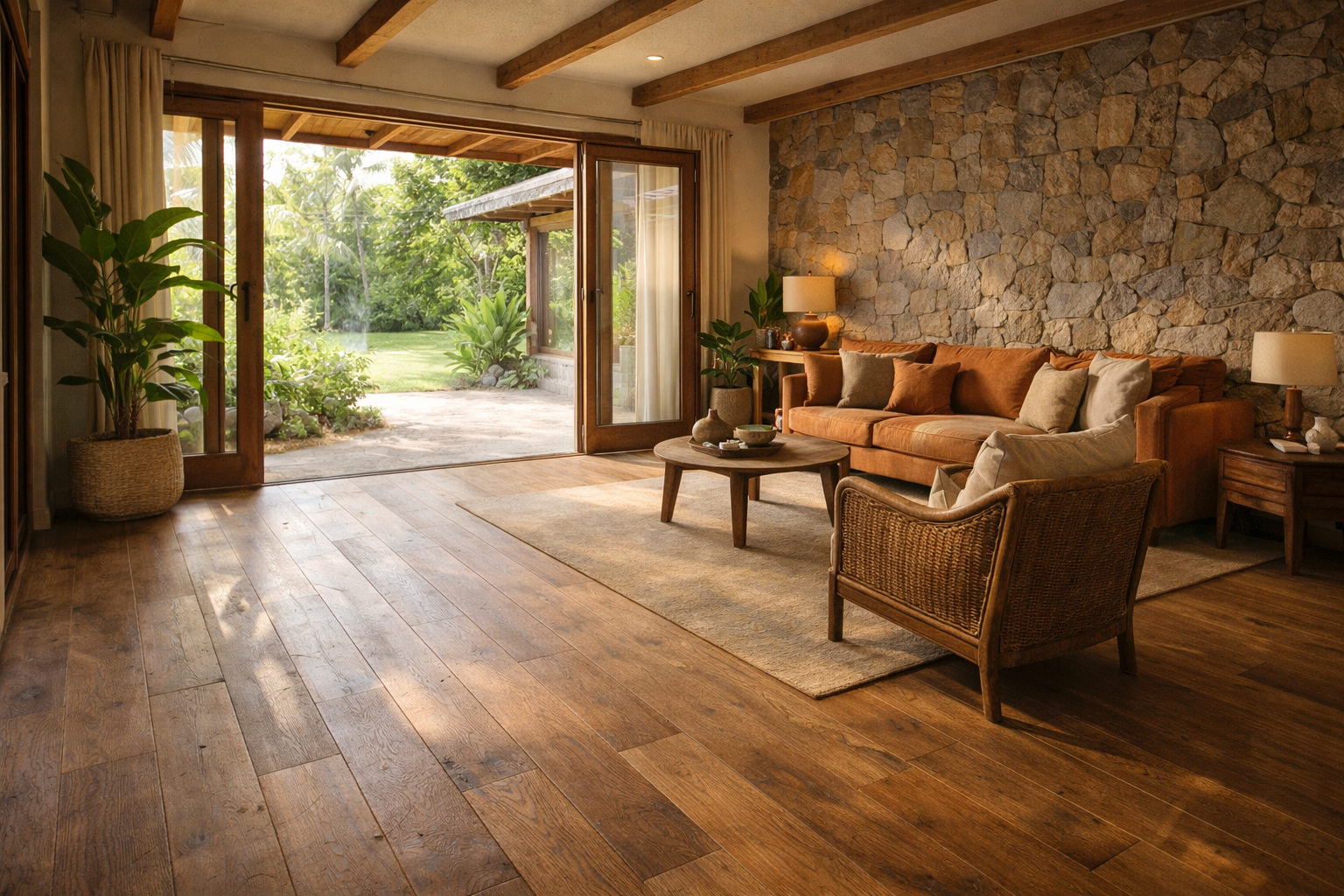
Why mid-tones work so well
- They don’t “fight” most furniture colours
- They’re forgiving day-to-day (not too light, not too dark)
- They fit both modern and earthy interiors
Applies to all flooring types
Whether you’re considering tiles, wood looks, vinyl/SPC or laminate, the colour logic stays the same: mid-tones are the easiest to live with.
5) Pastels & playful colours: how they interact with floors
Pastels (sage green, soft blue, dusty pink, warm terracotta) are increasingly popular in Kenyan interiors — especially in apartments, children’s rooms, and modern kitchens. The trick is to keep the floor as the stable base so your walls can be expressive.
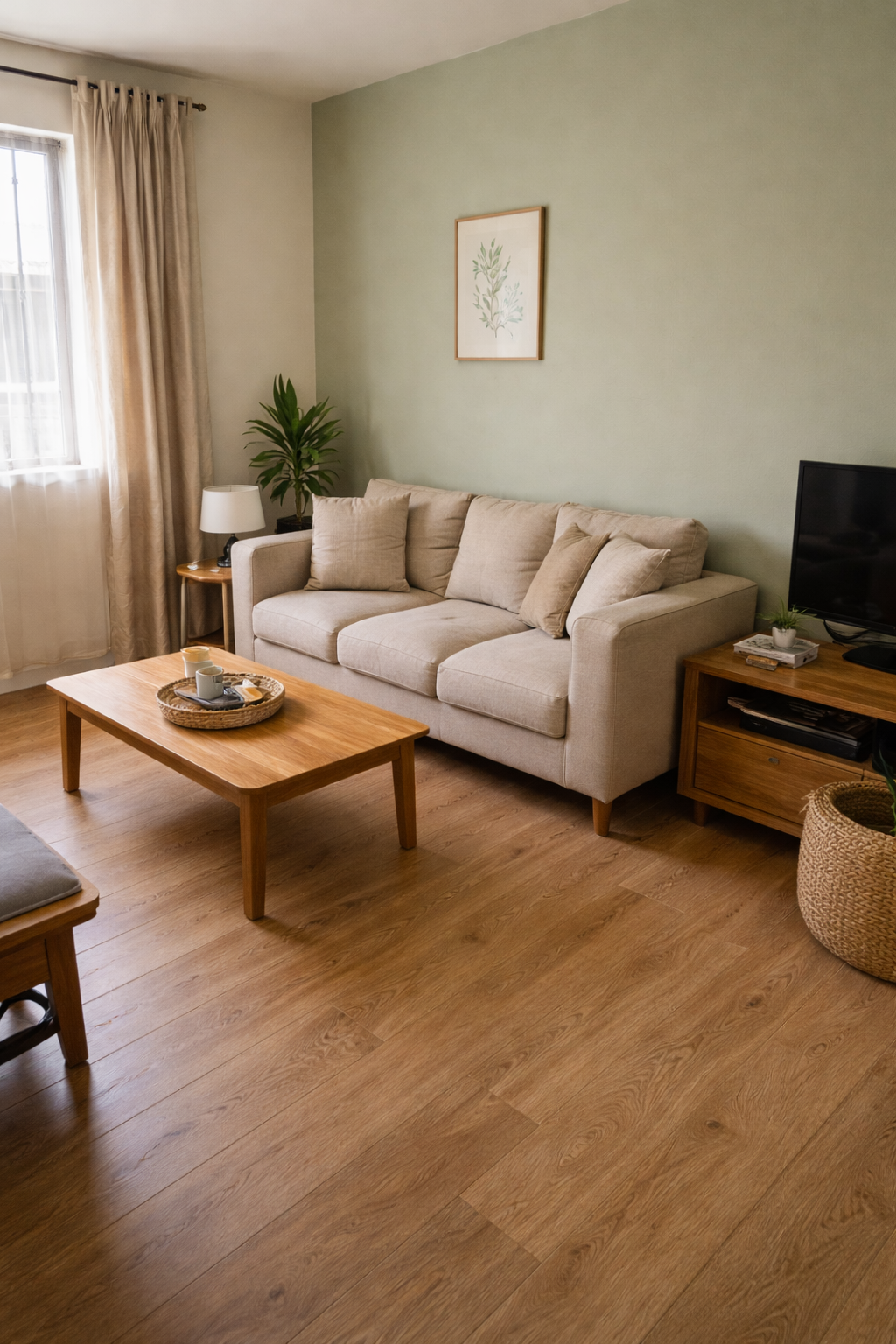
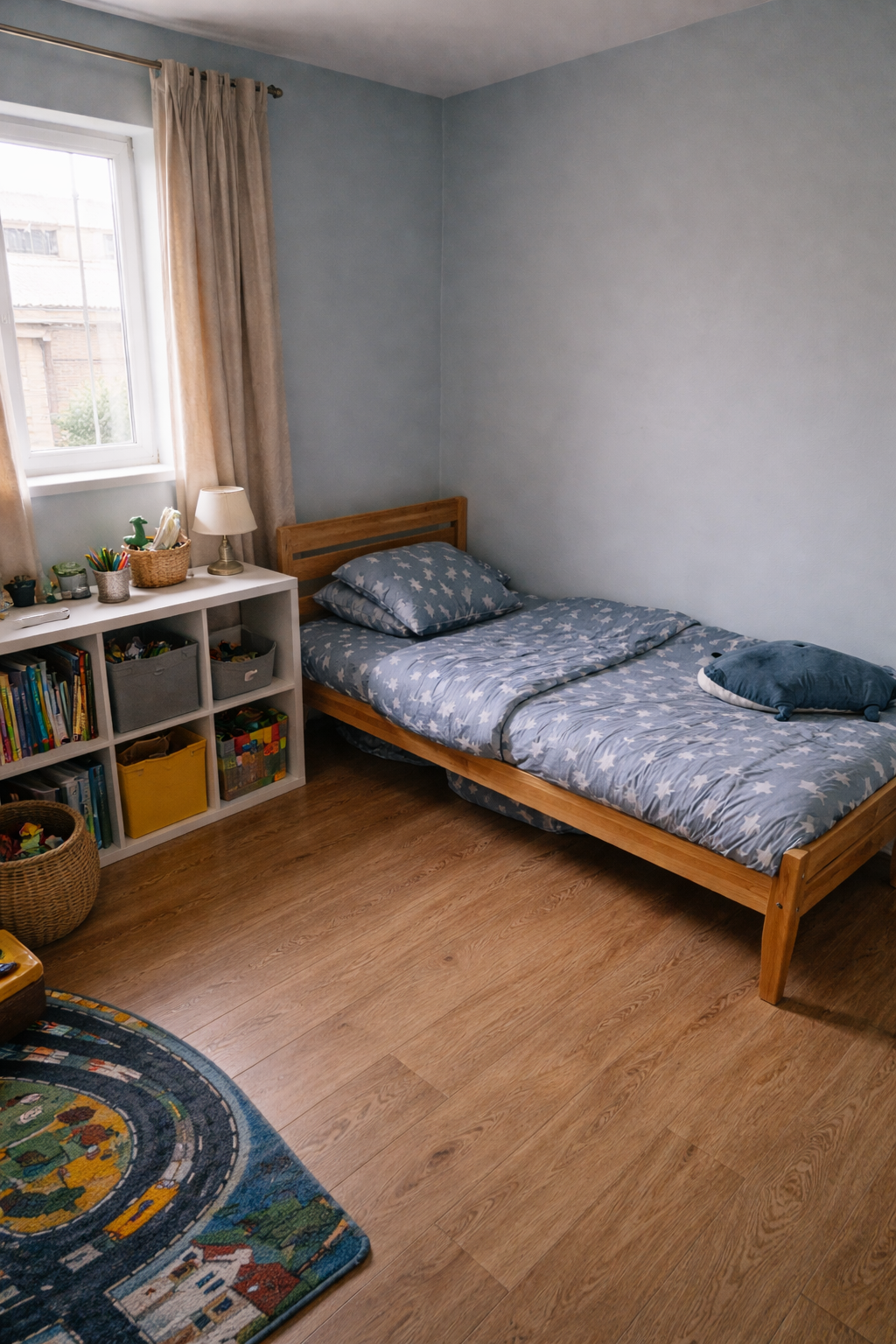
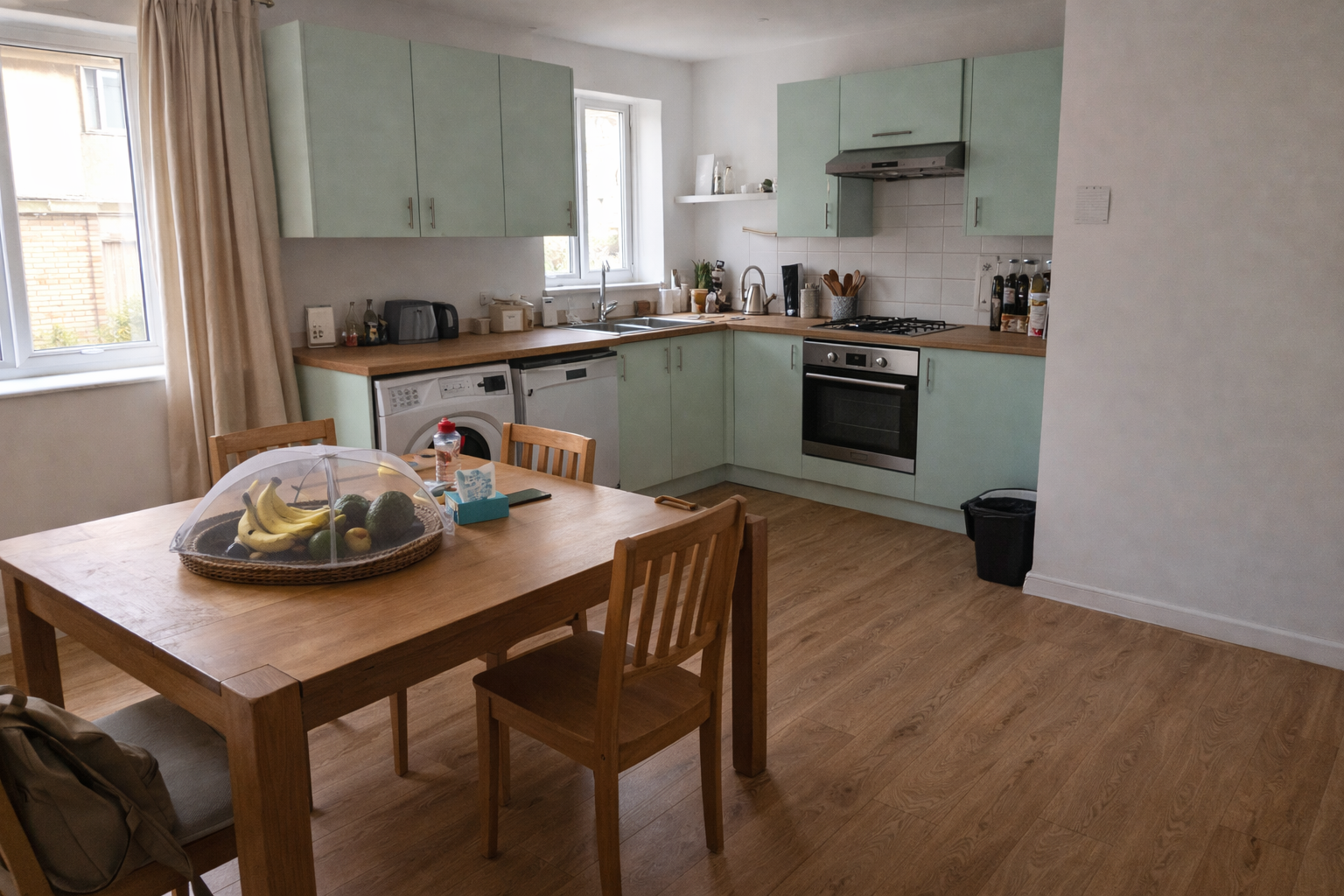
Simple pairing rules (easy to remember)
- Pastel walls + warm oak floor = calm, modern, welcoming
- Bold wall colour + neutral floor = stylish without being chaotic
- Busy patterns everywhere = the room feels smaller and noisy
6) Quick decision guide for Kenyan homes
Use this as a fast reference when choosing flooring colour — whether you prefer tiles, vinyl/SPC, laminate, engineered wood or any other option available in Kenya.
| If your space is… | Choose flooring colours like… |
|---|---|
| Small, low light, or narrow (common apartments) | Light oak, greige, warm light neutrals (avoid dark-on-dark) |
| Large and bright (big windows/high ceilings) | Dark walnut, rich browns — but keep walls/ceiling lighter for contrast |
| Warm & earthy style (stone/terracotta/wood beams) | Natural mid-oak tones, warm browns, matte textures |
| Family home (kids, guests, busy days) | Mid-tones that hide daily dust better than very dark floors |
| You love pastels & accent walls | Keep the floor neutral/warm so walls can be expressive |
One-liner that saves money
If you’re unsure, go with a natural mid-tone — it works with the widest range of Kenyan furniture, paint colours, and future renovations.
FAQs: Flooring colours in Kenya
These quick answers help you decide faster — and help Google understand the page.
What flooring colour makes a room look bigger?
Do dark floors work in Kenya?
Which flooring colours hide dust best?
Can I use pastel wall colours with wood-look floors?
Does this colour advice apply to tiles, vinyl/SPC, laminate and engineered wood?
Final thought
The best flooring colour is the one that matches how you actually live — your light, your space size, your style, and your tolerance for daily dust. If you choose the right base tone, everything else (paint, décor, furniture) becomes easier.
Keywords covered naturally: flooring Kenya, flooring colours Kenya, best flooring colour for small rooms, light vs dark flooring, wood look flooring, tiles, laminate, engineered wood, SPC, LVT, Nairobi apartments, Kenyan home interior design.